Introduction
You have an idea, but you don’t say it out loud. Someone asks for your opinion in a meeting, and you shrink a little, say “it’s fine either way,” even though you actually have a strong preference. You want to start something — a business, a course, a new habit, a hard conversation — but there’s this quiet voice asking, “What if you fail? What if people see you try and watch you fall short?”
So you wait. You tell yourself you’ll do it when you feel more ready, more sure, more like the person who could actually pull it off.
If this sounds familiar, you’re not broken, and you’re not “just not a confident person.” You’ve likely just never been taught how confidence actually works.
Here’s the part nobody tells you clearly enough: confidence is not a personality trait you’re either born with or without. It’s not about becoming loud, fearless, or endlessly self-assured. It’s a skill — built the same way any skill is built, through repetition, small wins, and evidence you collect about yourself over time.
In this article, you’ll learn what actually causes low confidence, how to recognize it in your own life, and ten specific, doable steps to start building it — starting today, not “someday.”
Do You Struggle With Low Confidence?
Before jumping into the steps, it helps to see the pattern clearly. Recognizing it is the first real step toward changing it. You might be dealing with low confidence if you notice yourself:
- Constantly comparing your life, body, career, or relationships to other women around you
- Overthinking small decisions, like what to reply in a text or what to order at a restaurant
- Staying quiet in conversations because you’re afraid of saying the “wrong” thing
- Needing someone else’s approval before you feel okay about a decision you already made
- Replaying your mistakes for days while barely registering what you did well
- Assuming other people are more capable, more put-together, or more “ahead” than you
- Avoiding opportunities — a promotion, a class, a date, a trip — because you don’t feel ready yet
- Starting things with excitement, then quitting quickly once self-doubt creeps in
If two or three of these felt uncomfortably accurate, that’s useful information, not a verdict on who you are. It just tells you where to focus.
The 10 Practical Steps to Build Real Confidence
Step 1 — Stop Waiting to Feel Ready
Why it matters: Most people assume confidence comes first, then action follows. In reality, it usually works backward. You take the action while still scared, and the confidence shows up afterward, as proof that you survived it.
If you wait to feel 100% ready, you may wait forever, because readiness is a feeling, and feelings don’t always cooperate on schedule.
Real-life example: Say you want to speak up in a team meeting but keep telling yourself, “I’ll say something once I feel more confident.” Meanwhile, someone with far less to say speaks up anyway, simply because they didn’t wait for the fear to disappear first.
Try this today: Pick one small thing you’ve been postponing until you “feel ready” — sending a message, asking a question, signing up for something. Do it in the next hour, while the fear is still there.
Takeaway: Confidence is often the result of action, not the requirement for it.
Step 2 — Keep Small Promises to Yourself
Why it matters: Confidence is largely built on self-trust — believing your own word means something. Every time you say you’ll do something and then don’t, you quietly teach yourself that your intentions don’t hold weight. Every time you follow through, even on something small, you build evidence that you can rely on yourself.
Real-life example: You tell yourself you’ll go for a 10-minute walk after work. You do it. It seems minor, but you’ve just proven to yourself that when you commit to something, you follow through — and that pattern compounds.
Try this today: Choose one small promise — finishing a task you’ve been avoiding, waking up at the time you set, writing three lines in a journal — and keep it before the day ends.
Takeaway: Confidence grows from kept promises, not big declarations.
Step 3 — Challenge Negative Self-Talk
Why it matters: Thoughts like “I’m not good enough,” “I’ll embarrass myself,” or “everyone else is better than me” feel like facts, but they’re just thoughts — often old, automatic, and unexamined. Left unchallenged, they quietly shape your behavior, making you avoid things before you’ve even tried them.
Real-life example: Before a job interview, you think, “I’m probably not qualified enough.” Instead of accepting it, ask: “Is this actually true, or am I assuming the worst because I’m nervous?” Often, the honest answer is that you’re underselling your own experience.
Try this today: Write down one negative thought you had about yourself this week. Next to it, write a more balanced version — not overly positive, just more accurate. For example, “I always mess things up” becomes “I made one mistake, and I fixed most of it.”
Takeaway: You don’t have to believe every thought you have about yourself.
Want to make this a daily practice?
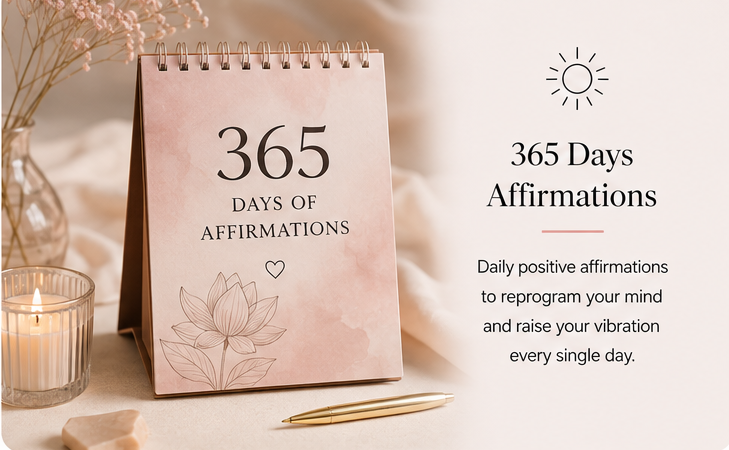
Confidence grows through repetition and intentional self-talk. If you want a simple way to practice this every day, 365 Days of Powerful Affirmations gives you one affirmation for each day of the year—so you always have a positive reminder to return to.
Step 4 — Stop Comparing Your Behind-the-Scenes to Someone Else’s Highlight Reel
Why it matters: Social media isn’t inherently the problem — comparison without context is. You’re seeing someone’s best photo, best week, or best update, and comparing it to your ordinary Tuesday. That’s not a fair comparison, and it will always leave you feeling behind.
Real-life example: You scroll through a friend’s vacation photos and immediately feel like your life is falling short. You forget that you’re not seeing her stress, her doubts, or the parts of her life she didn’t post.
Try this today: Next time you catch yourself comparing, pause and ask: “What do I actually know about this person’s full life?” Then redirect your attention to one thing you’ve personally made progress on this month.
Takeaway: Comparison steals attention from your own progress — and progress is what actually builds confidence.
Step 5 — Improve One Skill You Care About
Why it matters: Confidence is closely tied to competence. When you get genuinely better at something, your confidence in that area rises naturally — not because you told yourself to feel confident, but because you have real proof you’re capable.
Real-life example: Someone who feels shaky about public speaking joins a small group where she practices talking in front of five people regularly. She doesn’t become fearless overnight, but after a few months, she’s noticeably calmer — because she has actual reps behind her.
Try this today: Pick one skill that matters to your goals — communication, writing, a work skill, fitness, managing money — and spend 20 minutes practicing it today.
Takeaway: Confidence follows competence, and competence comes from practice.
Step 6 — Practice Speaking Up
Why it matters: Many women learn early to stay agreeable, avoid conflict, and prioritize other people’s comfort over their own voice. Speaking up is a skill, and like any skill, it gets easier with low-stakes practice before you need it in high-stakes moments.
Real-life example: Instead of jumping straight into a difficult conversation with a partner or boss, you start smaller — telling a waiter your order was wrong, or saying “actually, I’d prefer Thursday” instead of agreeing to a time that doesn’t work for you.
Try this today: Voice one small opinion or preference today that you’d normally keep to yourself — where to eat, what you think about a topic, a boundary you need.
Takeaway: Speaking up gets easier the more small opportunities you take.
Step 7 — Take Care of Your Body and Appearance for Yourself
Why it matters: How you treat your body affects how you feel about yourself, but this isn’t about chasing an ideal look or meeting someone else’s beauty standard. It’s about basic self-respect: enough sleep, movement, hygiene, and clothes that make you feel like yourself.
Real-life example: On days you’re rushed and skip basic care — barely sleeping, wearing whatever’s closest, skipping meals — you often feel more scattered and less sure of yourself. On days you take fifteen extra minutes for yourself, you tend to walk into the day steadier.
Try this today: Do one thing today purely because it makes you feel more like yourself — not to impress anyone. That could be a proper meal, a shower that isn’t rushed, or wearing an outfit you actually like.
Takeaway: Self-care isn’t vanity — it’s part of how you build a steady relationship with yourself.
Step 8 — Learn to Handle Failure Without Attacking Yourself
Why it matters: One of the biggest confidence killers is turning a single mistake into a verdict on your entire worth. “I made a mistake” is a fact. “I am a mistake” is a story you’re telling yourself — and it’s not the same thing.
Real-life example: You send an email with a typo to your boss. “I made a mistake” lets you fix it and move on. “I’m so careless, I always mess things up” keeps you stuck in shame for the rest of the day.
Try this today: Think of a recent mistake. Write one sentence describing what happened factually, without judgment words like “stupid,” “failure,” or “always.” Then write one thing you’d do differently next time.
Takeaway: What you did wrong is not the same as who you are.
Step 9 — Set Boundaries and Stop Constantly Seeking Approval
Why it matters: When your decisions depend entirely on other people’s approval, your confidence becomes borrowed instead of built. Setting boundaries — even small, polite ones — teaches you that your own judgment is enough.
Real-life example: A friend asks for a favor you don’t have time for. Instead of automatically saying yes to avoid disappointing her, you say, “I can’t this time, but thank you for thinking of me.”
Try this today: Practice one of these in a real situation: “No,” “Not right now,” “I need time to think,” “I don’t agree,” or “That doesn’t work for me.” Keep it simple and calm.
Takeaway: You don’t need everyone’s approval to trust your own decisions.
Step 10 — Build a Daily Confidence Practice
Why it matters: Confidence isn’t built through one big moment — it’s built through small, repeated actions that stack up over weeks and months. A short daily practice keeps you consistent without requiring huge amounts of time or energy.
Real-life example: Instead of relying on motivation, which comes and goes, a simple five-minute morning routine becomes something you do automatically, the same way you brush your teeth.
Try this today: Start a 5–10 minute daily confidence routine:
- 2 minutes of journaling (how you feel, what’s on your mind)
- 1 small uncomfortable action (something you’d normally avoid)
- 1 promise kept, however small
- 1 thing you did well, however minor
- 1 next action for tomorrow
Takeaway: Small daily actions, repeated consistently, matter more than occasional big efforts.
The 7-Day Confidence Challenge
If you want a simple way to put all of this into practice, try this over the next week:
- Day 1: Identify one confidence blocker holding you back.
- Day 2: Keep one small promise to yourself.
- Day 3: Challenge one negative thought you catch yourself having.
- Day 4: Do one thing you’ve been avoiding.
- Day 5: Speak up about something small.
- Day 6: Do one thing that improves a skill you care about.
- Day 7: Reflect on what you noticed about yourself this week.
You don’t need to do this perfectly. Missing a day doesn’t erase your progress — it just means you pick it back up the next day.
What Confidence Is Not
It’s worth clearing up a few misunderstandings, because a lot of people chase the wrong thing when they try to “become confident.”
Confidence is not:
- Being the loudest person in the room
- Always knowing the right answer
- Never making mistakes
- Looking a certain way or meeting a certain standard
- Getting everyone’s approval
- Never feeling nervous or unsure
- Being “better” than other people
Genuine confidence looks much quieter than that. It looks like feeling nervous before a presentation and doing it anyway. It looks like making a mistake and correcting it without spiraling. It looks like having a preference and stating it, even softly. It’s less about how you appear to others and more about how much you trust yourself when no one’s watching.
Common Mistakes That Slow Down Confidence
- Waiting for motivation to strike. Motivation is unreliable. Solution: rely on small, scheduled actions instead of waiting to “feel like it.”
- Trying to change everything at once. Overhauling your whole personality overnight usually leads to burnout. Solution: pick one step from this article and focus there first.
- Comparing your progress to someone else’s timeline. Everyone builds confidence at a different pace, in different areas. Solution: track your own progress against your own past, not against other people.
- Being extremely self-critical after setbacks. Harsh self-judgment slows growth rather than speeding it up. Solution: use the “I made a mistake” reframe from Step 8.
- Expecting confidence to appear overnight. Confidence is cumulative, not instant. Solution: think in months, not days, and give small consistent actions time to add up.
When to Seek Professional Help
Occasional self-doubt and insecurity are a normal part of being human — they don’t mean something is wrong with you. However, if feelings of low self-worth, anxiety, or fear are significantly affecting your daily life, relationships, work, or education, it can help to speak with a qualified mental health professional. A therapist or counselor can offer support and tools that go beyond what any article can provide, and reaching out is a reasonable, practical step — not a sign of failure.
Final Thoughts
You don’t need to wake up tomorrow as the most confident version of yourself. That’s not how this works, and expecting it will only leave you disappointed.
What you actually need is much smaller: one decision, one small action, one promise kept to yourself. Confidence builds in this order — action leads to experience, experience leads to self-trust, and self-trust leads to confidence. There’s no shortcut around the sequence, but there’s also no need for one. Small steps, repeated consistently, are enough.
So here’s a practical question to sit with: what is one small thing you would do today if you trusted yourself just 10% more?
Whatever comes to mind — do that one thing.
If you’d like a simple way to keep this practice going beyond today, you might also find it helpful to explore a structured daily confidence journal or self-trust workbook, if you have one available as part of your own personal growth resources. It’s not necessary to keep building — everything in this article works on its own — but it can make consistency easier for readers who like a guided format.
FAQ
1. Can confidence really be learned? Yes. Confidence is built through repeated action and experience, not something you’re simply born with or without. People who seem naturally confident have usually just practiced trusting themselves more, often through years of small experiences.
2. How can I become more confident quickly? There’s no genuine shortcut, but you can start seeing small shifts by taking one small uncomfortable action today and keeping one promise to yourself. Quick fixes tend to fade; consistent small actions build something lasting.
3. Why do I have low confidence? Low confidence often develops from a mix of past experiences — criticism, comparison, fear of judgment, or a pattern of avoiding challenges. It’s rarely about one single cause, and it’s not a reflection of your actual worth or ability.
4. How can I stop caring so much about what others think? You likely won’t stop caring completely, and that’s okay. What helps is building enough self-trust that other people’s opinions become one input among many, rather than the deciding factor in how you see yourself.
5. What is the difference between confidence and self-esteem? Confidence is usually about trusting your ability to handle specific situations or tasks. Self-esteem is broader — it’s your overall sense of worth as a person, regardless of performance. The two influence each other but aren’t identical.
6. What can I do every day to build confidence? A short daily routine works best: a couple of minutes of journaling, one small uncomfortable action, one kept promise, noting one thing you did well, and identifying one next step. Consistency matters more than intensity.